Travelling with Over-the-Counter Medication in the UK
Whether you’re heading on a weekend getaway or an international holiday, packing your health essentials is just as important as remembering your passport. A common question many travellers ask is, “Can you take non-prescription medication on a plane in the UK?” The good news is that, in most cases, yes, you can.
Non-prescription medications, also known as over-the-counter (OTC) medicines, are generally permitted on flights departing from UK airports. However, there are a few important airline and airport security rules to keep in mind, particularly when travelling with liquids, gels, sprays, or larger quantities of medication.
Understanding the latest UK airport medication rules can help you travel confidently and avoid unnecessary delays at security.
What Counts as Non-Prescription Medication?
Non-prescription medications are medicines that can be purchased without a doctor’s prescription. Common examples include:
- Pain relief tablets such as paracetamol and ibuprofen
- Cold and flu remedies
- Allergy medications and antihistamines
- Indigestion and heartburn treatments
- Motion sickness tablets
- Cough syrups
- Nasal sprays
- Eye drops
- Vitamins and dietary supplements
These medications are widely accepted for personal use when travelling by air.
UK Airport Security Rules for Medication
When flying from a UK airport, most solid medications, including tablets and capsules, can be packed in your hand luggage or checked baggage.
If you are carrying liquid medication, airport security rules generally apply. Liquids carried in hand luggage are typically subject to standard security restrictions unless they qualify as essential medicines. Where possible, keep medications in their original packaging to help identify them if requested by security staff.
If you need to carry larger quantities of medically necessary liquid medication, it is advisable to check your airline’s requirements before travelling and allow extra time during the security screening process.
Should You Pack Medication in Hand Luggage?
For most journeys, it is recommended to keep essential medications in your hand luggage.
This offers several advantages:
- Easy access during your flight
- Protection if checked baggage is delayed or lost
- Quick availability in case of unexpected illness
- Reduced risk of damage from temperature changes in the aircraft hold
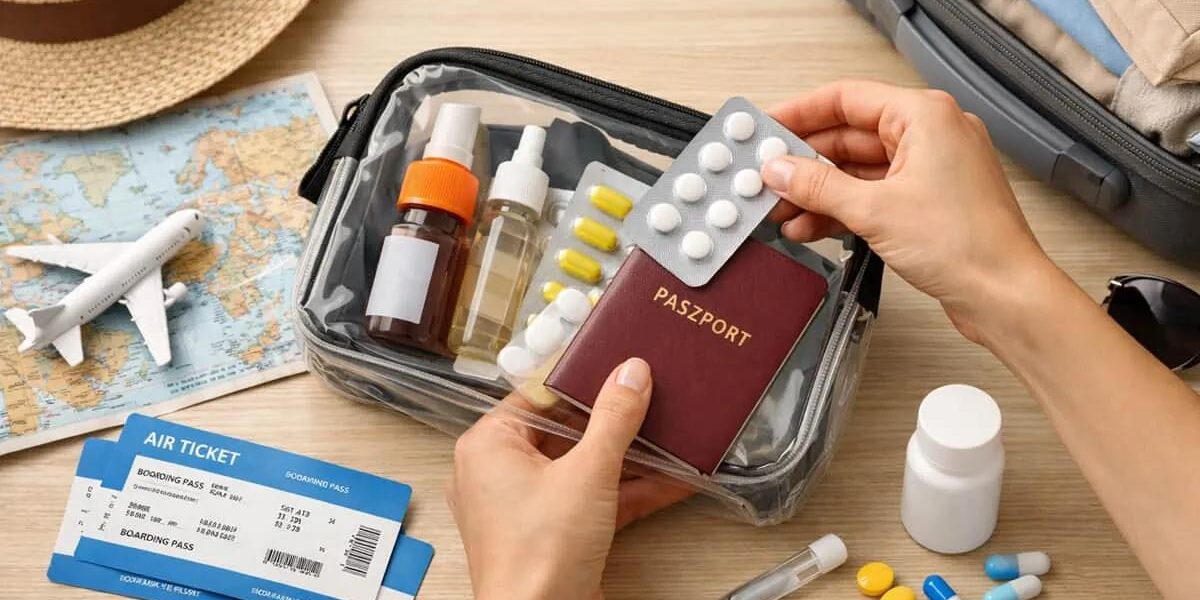
If you’re carrying multiple medications, consider packing them together in a small travel organiser for convenience.
Tips for Travelling with Over-the-Counter Medicines
Preparing ahead can make your journey much smoother. Consider these practical travel tips:
- Keep medicines in their original labelled packaging whenever possible.
- Carry only reasonable quantities for personal use.
- Check expiry dates before departure.
- Pack enough medication for your entire trip, plus a little extra in case of delays.
- Review the entry rules for your destination, as some countries restrict certain medicines that are readily available in the UK.
Being organised helps minimise delays and ensures you have everything you need while travelling.
Can You Take Vitamins and Supplements on a Plane?
Yes. Most vitamins, minerals, herbal supplements, and nutritional products are permitted on flights departing from the UK.
Tablets, capsules, and powders are usually straightforward to travel with. If you are bringing liquid supplements, they may be subject to airport liquid restrictions when carried in your cabin baggage.
Keeping supplements in their original containers can make airport screening easier.
International Travel Considerations
Although non-prescription medicines are generally allowed when departing from the UK, every country has its own import regulations.
Some medications that are commonly sold over the counter in the UK may be restricted or prohibited elsewhere. Before travelling internationally, research your destination’s customs and health regulations to ensure your medicines are permitted.
This simple step can help prevent unexpected issues when arriving abroad.
Common Mistakes to Avoid
To make your airport experience as smooth as possible, avoid these common travel mistakes:
- Packing essential medication only in checked baggage
- Carrying unlabelled medicines
- Forgetting to check liquid restrictions
- Bringing excessive quantities without a clear reason
- Assuming medication rules are the same in every country
A little preparation can save time and reduce stress on the day of travel.
Final Thoughts
So, can you take non-prescription medication on a plane in the UK? In most cases, yes. Over-the-counter medicines such as painkillers, allergy tablets, cold remedies, vitamins, and many other everyday health products are generally allowed for personal use when travelling. By following UK airport security rules, packing medicines sensibly, and checking your destination’s regulations before departure, you can travel with confidence and focus on enjoying your journey.
Whether you’re travelling for business, a family holiday, or an overseas adventure, planning ahead ensures your essential medications are always within easy reach—giving you peace of mind from take-off to landing.